
Initiatives for Overseas Forestry Business
Introduction to the plantation
【Forestal Anchile Ltda. (Republic of Chile)】
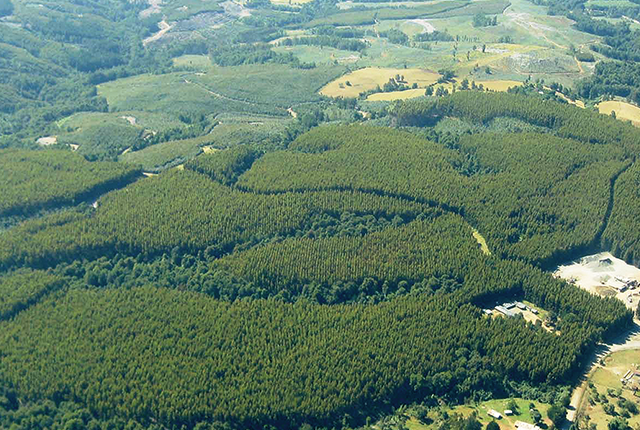
Forestal Anchile Ltda. is one of the world’s largest tree growers by volume thanks to its skill in choosing excellent tree species and its state-of-the-art tree-planting technologies cultivated for over 30 years.
| Location of operations: | Republic of Chile (IX Region, X Region, and XIV Region) |
|---|---|
| Date established: | June 1989 |
| Area of operations: | About 59,000 ha (cf. the area of Tokyo’s 23 wards: 62,145 ha) |
| Area of plantation: | About 29,000ha (as of the end of FY2020) |
| Forest certification: | Performed by independent third-party institutions to certify that the company is properly managing forests FSC Certification (in 2002) PEFC Certification (in 2008) |
Environmental Protection Initiatives
Forestal Anchile conducted a joint fact-finding survey beginning in January 2014 with Austral University of Chile on plant and animal life in native forestland owned by the company and complied the results in March 2017. Based on these results, the company is taking appropriate measures for each location, including putting up signs and fences to prevent protected forests, and particularly forests with high conservation value, from being damaged by people or livestock. Forestal Anchile also participates in activities to protect natural forests, water resources, and biodiversity together with Chile’s National Forest Corporation (CONAF), Instituto Forestal de Chile (INFOR), municipal governments, local community groups, forester associations, forestry companies, and retail power utilities. In December 2018, alerce trees (Patagonian cypress), which have been designated a national monument in Chile, were found in protected forests within the forestland owned by the company. After talks with CONAF and local NGOs, a habitat survey was conducted by a specialist organization and now appropriate conservation activities are being conducted based on the organization’s recommendations.
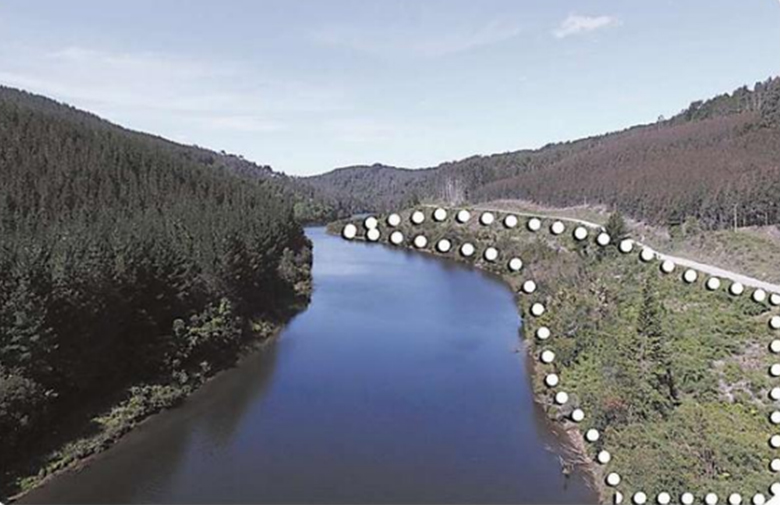
Futa area, Corral, Region XIV, Republic of Chile
Dotted lines indicate the area for native forest regrowth
Native forest regrowth in 6 ha along the Futa River
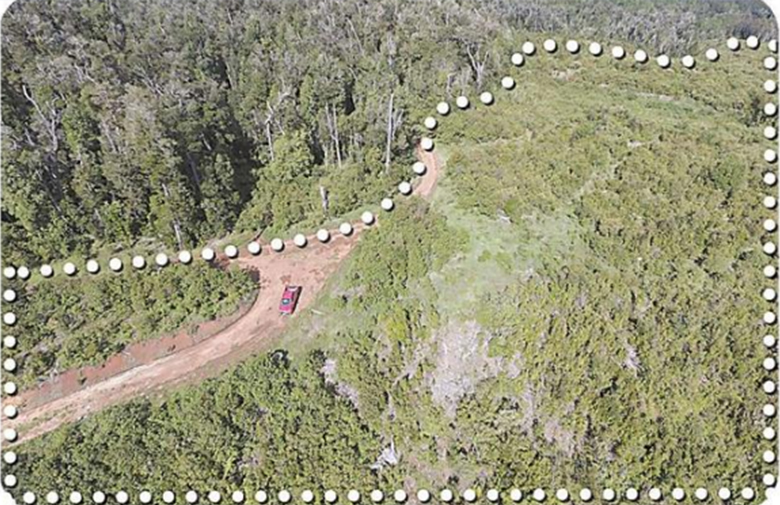
Los Riscos forestland, Purranque, Region X, Republic of Chile
Natural forest regrowth in 41 ha of the forestland
Sustainable Forestation
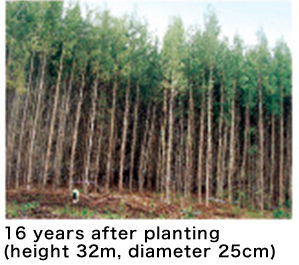
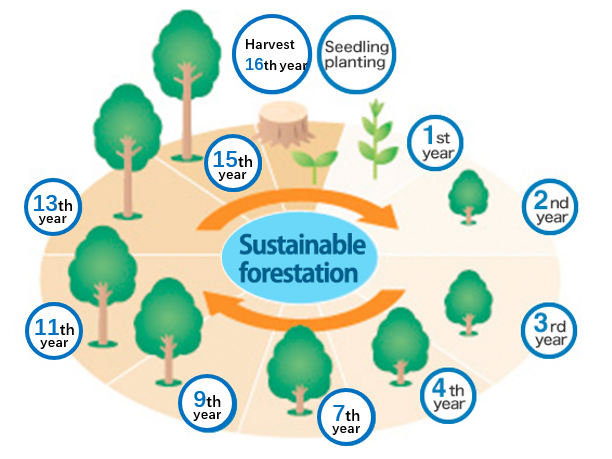
By dividing the harvest area into the same number of blocks as the number of years trees take to mature for harvest following tree planting, and going through the cycle of planting, nurturing, harvesting systematically each year, we achieve stable growth and constant yields. In our forestry business, we practice sustainable forestation management, ensuring a constant supply of mature trees for harvest.
FSC®Certification
An international certification by a non-governmental organization established in 1993 that established a global standard on forest management.
PEFC Certification System
The world’s largest forest certification system operated by a non-governmental organization established in 1999 with the aim of promoting sustainable forest management. PEFC is a mutual recognition scheme in which obtaining a national forest certification that meets the requirements of PEFC and hence endorsed by PEFC would signify obtaining PEFC certification.
Initiatives to Preserve Biodiversity
Our Chilean subsidiary Forestal Anchile designates areas within forestry business land that are potentially the habitats of natural forests (alerce trees) and endangered species (southern river otter, black-necked swan) as areas with high conservation value and conducts regular surveys of them. Projected forestland adjacent to operating forests is marked off and monitored before and after operations are conducted. Drones are also utilized to take aerial photographs that are used to confirm that plant and animal ecosystems are not impacted.
Example of Ecology Monitoring at Forestal Anchile
(※This table scroll horizontally)
| Target | Target Area | Details of Monitoring | Frequency |
| Protection of natural evergreen species, such as alerce, cinnamon, coihue, etc. and protection of water intake points of indigenous peoples | 4,991ha | 1.Removal of domestic animals and garbage that affect ecology and monitoring of illegal logging | Monthly |
| 2. Monitoring of the growth condition of trees that sprouted from natural fallen seeds or from tree stumps, and the removal of alien species in the six survey areas. | Once a year | ||
| Protection of the southern river otter, black-necked swan, cocoi heron, etc. | 583ha | 1. Removal of domestic animals and garbage that affect ecology and monitoring of illegal logging. | Monthly |
| 2.Ecological monitoring Once or twice a year | Once or twice a year |
Initiatives to Select High-Quality Seedlings and Develop New Hybrids
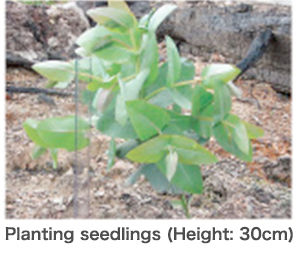
As a pioneer in overseas forestation, we work to select high-quality seedlings and develop new hybrids through artificial pollination while conducting mass production in company-owned nursery beds to raise productivity.
* Some of the conifers that are planted are purchased from outside sources, so it is not entirely in-house production.
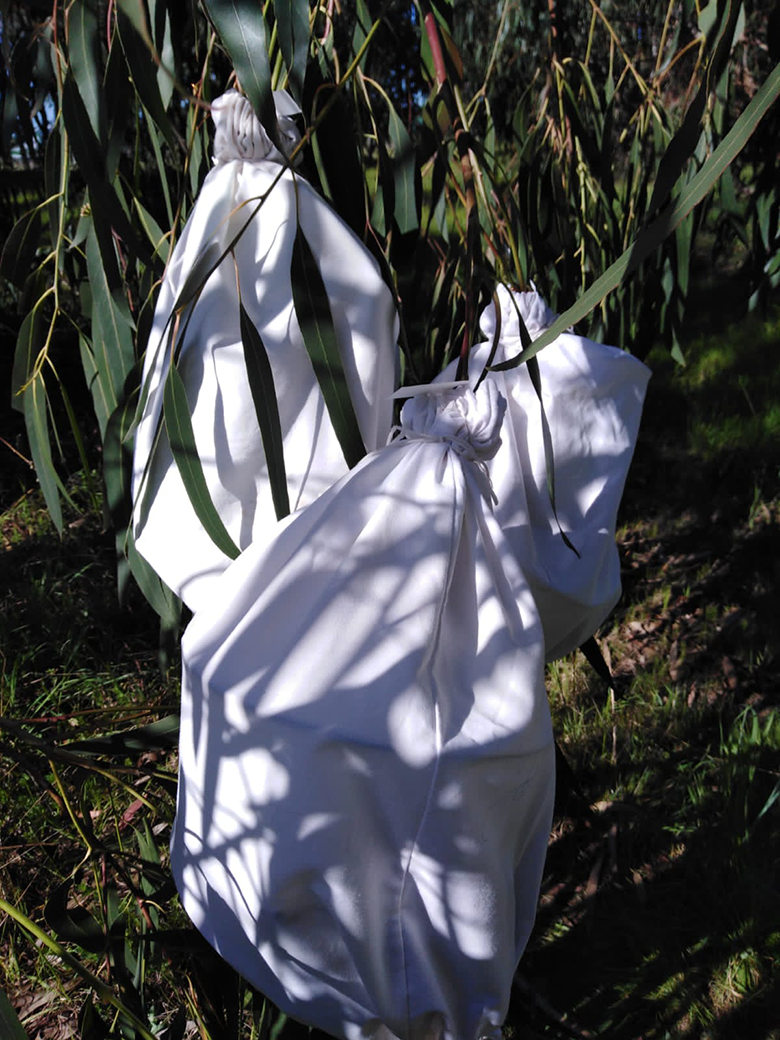
Development of new hybrids through artificial pollination
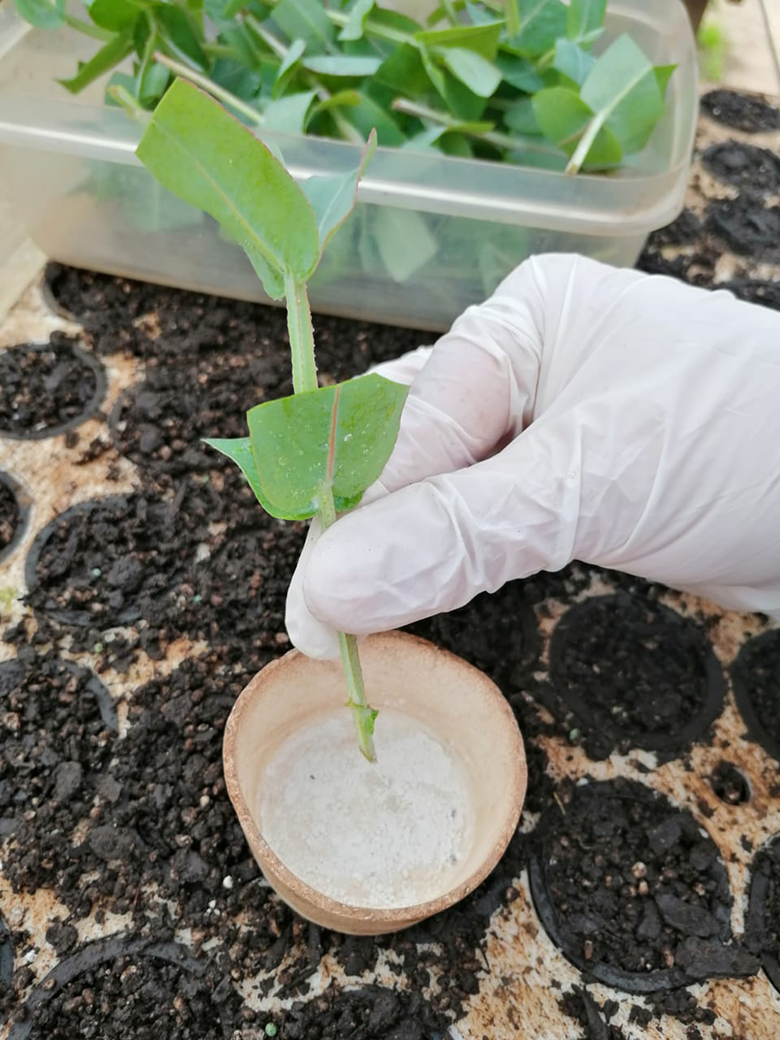
Production of rooted cuttings

In-house mass production of seedlings
